Saturday, February 14, 2009

St. Valentine's Day


Most Gracious Heavenly Father, Thou gavest Saint Valentine the courage to witness to the gospel of Christ and His Holy Church, even to the point of giving his life for it. Help us to endure all suffering for love of Thee, and to seek Thee with all our hearts; for Thou alone art the source of life and love. Grant that we may have the courage and love to be strong witnesses of Thy truth to the whole world. We ask this through our Lord Jesus Christ, Thy Son, who lives and reigns with Thee and the Holy Spirit, one God, for ever and ever. Amen.

Friday, February 13, 2009

The Tempest Opening Night - Tonight!

Please pray for our drama troupe here at the college. I'm involved with a spectacular production of William Shakespeare's "The Tempest", and after a whirlwind but very successful dress rehearsal yesterday, we're all geared up for the premiere tongiht. Please pray for us!

Wednesday, February 11, 2009

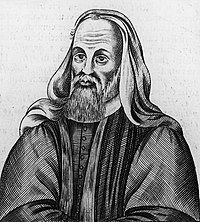
The Song of the Pelagian Heresy by Belloc


Well, I am in my fifteen minute break period between Latin and Christian Doctrine Classes, so I haven't time to be original. So I present to you a song by a far better writer than I.

THE SONG OF THE PELAGIAN HERESY FOR THE STRENGTHENING OF MEN'S BACKS AND THE VERY ROBUST OUT-THRUSTING OF DOUBTFUL DOCTRINE AND THE UNCERTAIN INTELLECTUALby Hilaire Belloc

Pelagius lived in Kardanoel
and taught a doctrine there
How whether you went to Heaven or Hell,
It was your own affair.
How, whether you found eternal joy
Or sank forever to burn,
It had nothing to do with the church, my boy,
But it was your own concern.

(Semi-chorus)
Oh, he didn't believe in Adam and Eve,
He put no faith therein!
His doubts began with the fall of man,
And he laughed at original sin!

(Chorus)
With my row-ti-tow, ti-oodly-ow,
He laughed at orignal sin!

Whereat the Bishop of old Auxerre
(Germanus was his name)
He tore great handfuls out of his hair,
And he called Pelagius Shame:
And then with his stout Episcopal staff
So thoroughly whacked and banged
The heretics all, both short and tall,
They rather had been hanged.

Oh, he thwacked them hard, and he banged them long
Upon each and all occasions,
Till they bellowed in chorus, loud and strong
Their orthodox persuasions!

With my row-ti-tow, ti-oodly-ow,
Their orthodox persuasions!

Now the Faith is old
and the Devil is bold
Exceedingly bold. indeed;
And the masses of doubt
That are floating about
Would smother a mortal creed.
But we that sit in sturdy youth,
And still can drink strong ale,
Oh -- let us put it away to infallible truth,
Which always shall prevail!

And thank the Lord
For the temporal sword,
And for howling heretics, too;
And whatever good things
our Christendom brings,
But especially the barley-brew!

With my row-ti-tow, ti-oodly-ow
Especially the barley-brew!

Tuesday, February 10, 2009

Condensed Books (and Movies)

The idea of condensed books is stolen from RinkWorks, a website that Lady Clare showed me. Under their book-a-minute page, the webster is greeted by the words,

We at Book-A-Minute understand that your time is valuable. You want to experience the wonder and excitement of the fine art of literature, but reading actual books requires a significant time investment. We've got the solution for you. Our ultra-condensed books are just the ticket.

E.g. THE COMPLETE WORKS OF JANE AUSTEN

Female Lead:
I secretly love Male Lead. He must never know.
Male Lead
I secretly love Female Lead. She must never know.
(They find out.)

THE END

So, without further ado - my condensed books and movies.

LES MISERABLES
By Victor Hugo

Javert: I tell you he's alive!
Police: Yeah, right.
Javert: Yet I will find him.
He finds him. Valjean gets away.
Javert: I tell you he's alive!
Police: Yeah, right.
Javert: Yet I will find him.
He finds him. Valjean gets away.

Repeat the above as often as necessary. In the meantime, a revolution occurs, and everyone shoots, gets shot at, falls in love, and come to profound realiztions in sentences that last a page.
Javert: I'm alive! (thinks a moment) Yeah, right. (splash)
Valjean gets away one last time, and more than a cenutry later Boublil and Schonberg are rolling in cash.

THE SCARLET PIMPERNEL
by Baroness Orczy

Marguerite: He's doomed!
Chauvelin: I'm damned.
Percy: I'm demmed! I'm deemed dumb. Dum de dum dum dum. But not really.

THE ELIXIR OF LOVE
By Gaetano Donizetti

He got drunk once and she didn't want him. Then he got drunk again and she did.

THE COMPLETE CANON OF RUSSIAN LITERATURE

Women: (Scream)
Men: I am severely depressed and going through a crisis. I'd better kill somebody or become extremely spiritual in an odd way.
Women: (Scream!)
Men: I have insomnia, I am drunk, I am penniless, and the world holds no meaning for me.
Women: (Scream!)
Men: I think I will go to Siberia/America.
Women: (Scream!) It can't be!
Men: Shut up. I love you, and I can't stand you. Pass the vodka. The world is beautiful. I am very happy.
Women: (Scream!)
Men: Be quiet. I love everything passionately. I hate everything passionately.
All together: (Scream!)

THE COMPLETE WORKS OF ROSSINI

Lovers: Let us go away and marry! We must hurry! Yes, yes, we are going to leave the room. Yes, yes, we will go very silently. Yes, we must leave at once. We cannot dilly-dally. Yes, let us go immediately. Let us set off at once. We have no time to lose. Let us leave, let us hurry. Yes, let us get started.
Guardian: What are you two doing together? Off to a convent with you, my dear!
Lovers: Oh, my head is reeling! Pardon us - love was the cause of everything.
Guardian: Well, in that case I forgive you, and give my consent.
Lovers: Hooray! Long live love! Long live love!

I have many more, but that is enoguh for now.

Magic in Novels, Part II


All right, in my last post I had posed the question of the proper use of magic in fiction, and had established that magic is always wrong in the real world, since, as the Cathechism says, all real magic stems ultimately from Satan. I then asked whether it was permissable to portray magic in a good light in the world of imagination.

Magic has been a traditional part of storytelling for ages, from Gilgamesh consulting the oracle to Sindbad's encounter with the flowers of sorcery to Rumpelstiltskin spinning gold out of straw to a young girl stepping through a wardrobe into another world altogether. I have yet to run across anyone who genuinely believed that it is wrong to read "Sleeping Beauty" because the Lilac Fairy causes everyone to fall asleep by magic. But why not? Why does virtualy every Christian family introduce their children to fairytales when they contain the magic, which is condemned by the Church?
Why? Because fictional magic, properly portrayed, is not the occult. Rather, it is a reflection of the truth in a new, astonishing way. Take, for example, the Disney film of Sleeping Beauty. When Prince Philip is released from Maleficent's dungeons with the help of the fairies' wands, and manages to slay her in her dragon form with the Sword of Truth, it does not mean that he has turned to the power of the devil to acheive what he wants. Rather, this magic is in line with the miraculous power of goodness, and ultimately of God, that frees one from the prison of sin and allows us to triumph against evil, even if it be in the face of impossible odds. it is not a matter of an evil means acheiving a good end. It is a portryal of the truth in a fanciful manner.
Magic is used properly when it properly manifests reality and the natural order. This does not mean things must be portrayed exactly as they are, but in a manner that reminds us of what they truly are. Chesterton can express it in much better language than I can, so I quote from Chapter of 4 of Orthodoxy, "The Ethics of Elfland": "These tales say that apples were golden only to refresh the forgotten moment when we found that they were green. They make rivers run with wine only to make us remember, for one wild moment, that they run with water." It is just so with any manner of fictional magic. It is a literary device to show something astonishing and wonderful happening in a manner that could not be accomplished in day-to-day life, but resounds with truth.

Thus, if Pinnochio can magically transform from a puppet into a real boy, it is because the astonishing change emphasizes the love between him and his father, not dabbling in forbidden arts. The very thought is absurd. If Cinderella is able to don a beautiful gown that appears from no where, it is because she is beautiful in her interior humility. If Bastain can cross over from our world into the realm of Fantastica, it is because we are able to step into a whole new world by imagination and a good book. Granted, good magic is not usually directly allegorical (and it shouldn't be. Blatant symbolism can get on nerves as much as anybody's), but at its heart, it reflects the way things really are. Even "Guide my sword" is a faint affirmation of the power of prayer (Don't tell me I have to tell you what that's from. No, I didn't think so).

So why the great fluster about the appropriateness of imaginary magic? I would say it is because, for the first time in history, fictional magic is seldom used in accordance with the truth. In modern 'witchcraft and wizardry' fiction, magic is used more to violate the natural order than to enhance and glorify it.

Again. I'm just arriving at the beginning of an important point, and I need to go. Yes, I know I could just save it, finsih the post later and publish it to the web... But then again, people are more likely to read shorter blog items! Ha!

Magic in Novels, Part I


All right, this is a controversial topic, but what have I to lose by opening it? After all,

#1. Opening controversial topics has always been one of my favourite pasttimes - the fruit of a Socratic education.

#2. I doubt anyone will even notice I have posted this, seeing as I post so infrequently that it's hardly worth checking in. But what on Earth matters it? My "sister" Lady Rose introduced me to the delightful concept of blogging without obligation. I digress...

#3. It will help me clarify my own ideas as to how I use magic in my current novel.

Yes, as usual, there's a novel running rampant on the green. I am supposedly the master holding the leash, but what can you do when the dashed thing takes a mind to frolic? All you can do is keep a firm hold on the tether, try desperately to keep up with it, and enjoy the ride (or run - this is no pleasure cruise. Exhilarating, yes, but requiring effort)

I don't want to give it away at present - this is the Internet, after all - but suffice it to say that this story takes place in contemporary times, involves Arthurian Lengends (yes, Tennyson is included. One character is a descendant of Dagonet from the Idyllis), and, to get to the pint, magic is involved.

Yes, theren is an overabundance of 'magical' stories on the market. Just walk into the fiction section of Chapters, whether adult or children's, and you'll see shelf after shelf of enchantments, wizardry, and supernatural adventures. (Sorry to all you Americans - I'm assuming Barnes and Noble is similarly stocked. That is the American equivalent of Chapters, isn't it?) The problem is that most of these tales fall under three catergories. Ha, another group of three.

#1. Tolkien ripoffs. You know them. Dark lords, madeup tongues, elves, the quest to destroy the supremely evil thing, and not told in a fresh, new manner, mind you, but simply poor imitations of Tolkien's mastercraft. Yes, Tolkien was a genius, but the hordes of books that really want to be LOTR and aren't are simply pitiful.

#2. Pottermania. Again, another book phenomonon that everyone wants to imitate. (And I truly can't see why - no offence to any of you who are Rowling fans. We must disagree) Kids books these days are full of orphan children and the like learning all about wizardry in the modern world. Ugh. They almost completely dominate the children's sections. Most of these imitations are poorly written, crass, and as far as I can see are a great deal of garbage.

#3. Pink, fluffy stories. Little pixies in sparkly mini-dresses. A girl and her unicorn (a subset of the immense "a girl and her horse" genre). Nothing terrible about them, but they are so - shallow. Theyb do not live up to the name of true fantasy at all. Mainly, they seem to be about rainbows, clouds, follow your dreams, and blah blah blah.

I know I sound pessimistic, but I find it exceeding irritating. Do not get me wrong - I love fantasy. Perhaps that is why I find it so annoying that there aren't more stories like my all-time favourite magical stories - tales like those of Tolkien, C.S. Lewis, Michael Ende, the traditional fairy and folk tales.

All right, I'm getting rather off topic - this is supposed to apply to the use of magic in fiction specifically, and how it will affect my novel. I'd like to say that I love magic in fiction- I think it's wonderful when used well. But what does it mean to use magic well?

Obviously it is always wrong to use magic in real life. There was quite a bit on this in my Christian Doctrine class this morning, and we went over the Cathechism's words on magic. CCC #2116-2117 states:


All forms of divination are to be rejected: recourse to Satan or demons, conjuring up the dead or other practices falsely supposed to "unveil" the future. [Cf. Deut 18:10; Jer 29:8] Consulting horoscopes, astrology, palm reading, interpretation of omens and lots, the phenomena of clairvoyance, and recourse to mediums all conceal a desire for power over time, history, and, in the last analysis, other human beings, as well as a wish to conciliate hidden powers. They contradict the honor, respect, and loving fear that we owe to God alone.
All practices of magic or sorcery, by which one attempts to tame occult powers, so as to place them at one's service and have a supernatural power over others - even if this were for the sake of restoring their health - are gravely contrary to the virtue of religion. These practices are even more to be condemned when accompanied by the intention of harming someone, or when they have recourse to the intervention of demons. Wearing charms is also reprehensible. Spiritism often implies divination or magical practices; the Church for her part warns the faithful against it. Recourse to so-called traditional cures does not justify either the invocation of evil powers or the exploitation of another's credulity.


But what about in the world of books? Is it wrong to read or write about the "good guys" using magic? You obviously can tell that I don't think so, having already stated some of my favourite fantasy authors, who do portray some magic used judicially (although Tolkien is definitely not so magical as some believe him to be. Gandalf may be a wizard, but he sure doesn't recourse to non-natural means of achieving good very often).

I need to attend Mass now. At any rate, I have posed the question. I'll continue later.
Oh, and the picture at the top is from The Neverending Story. You have read it, haven't you?

Friday, January 23, 2009

New Words

Well, here at my college, we have been inventing new words as the need arises. I thought I'd share a few with you.

Carracking - Standing around, making plans to so something both fun and meaningful.
Fuggevol (foo-JEV-ol) - Random merriment
Isaacing- Laughing
Omelette- An atrocity
Cold Cabbage - Cold or room-temperature water
Spicy Sauerkraut - Hot water
Trevilkedung - A great surge of happiness when one is alone
The Wexford - The word that's on the tip of your tongue, but you just can't quite think of it for the life of you!

Wednesday, December 24, 2008

Random Thoughts on Christmas Eve

Good day, my dear friends. I am, without warning, in a mood for blogging today. I have truly no idea what I am to write, but hopefully something of at leat a little merit will arise.

Well, let's see. Over the last few days I indulged in my taste for film in a very small way by piecing together a mock trailer for a non-existant film of Jane Austen's "Mansfield Park". I read the book this past year, and despite numerous warnings that I would not enjoy this 'black sheep' of the Austen canon to any great degree, I was happily surprised to find that I did, especially since I also read the "scandalous" play they nearly perform in it, "Lovers' Vows" (please don't be shocked - it's milder than some of the things Jane Austen puts in her books, and is an extremely moral story about extremely proper people. I can't help but think JA was poking a bit of fun at Fanny and Edmund by having them so upset by it). However, I have yet to see any of the three film adpations, having been warned by the other ladies (and a few gentlemen!) of the Republic of Pemberley that two of the three versions are rather unfaithful to the book (Slavery? A vivacious Fanny Price? Fanny actually accepting - ugh - Henry Crawford?). The remainging one, an old BBC production, is rather hard to find. I suppose I could look on Amazon... Yes... But, in any case, I have not seen any film of MP. For this reason, I decided to cast some actors from films in my own selection of DVDs as Austen's characters, and edit them into a trailer. Heavily relying on films like "Rossini's Ghost" and "Persuasion", with about six films in all, and using music from Leonardo de Fillipis' "Therese", I'm rather pleased with the end product. Unfortunately, I can't post it for copyright reasons, but I certainly enjoyed it.


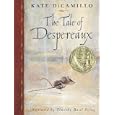
Well, The Tale of Despereaux film has been released, I believe. I don't know how it's doing in box offices, and I don't care at all. Ordinarily I am not a purist, and enjoy a film adaption of a book as much as any other, but somehow Kate DiCamillo's wonderful book, which everyone ought to read, is not compatible with 3D, CGI animation. No. Please read the book - a perfectly crafted story, nominally for children, but truly a piece of art for anyone. I believe C.S. Lewis said something to the effect that a children's book that cannot be read with enjoyment and profit by adults is a bad children's book. This is certainly not a bad children's book. Please, treat yourself to the beauty of this tale of darkness, light, a mouse, a princess, a needle, and a bowl of soup.

But not in the cinema.

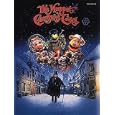
Last night was our family's annual viewing of "The Muppet Christmas Carol". Sometime this evening we will likely have our annual viewing of the Alistair Sims "A Christmas Carol" (Yes, I have read the book many times). Since the Muppet version is still fresh in my mind, I might as well dash off a bit about that as well. I must say that while it is definitely not the Dickens story, it is certainly an enjoyable romp. Michael Caine as Scrooge is fair. Gonzo and Rizzo, in their first time cast together, are just as delightful as they are in "Muppet Treasure Island". Our family loves Scrooge's nephew, Fred, dearly, and this Fred tops those of every serious adaption of the classic. He just exudes joy and makes you smile. Some songs are rather forgettable - for instance, "Bless Us All" - but some I can't help but enjoy. I especially like "There Goes Mr. Scrooge", with it's wonderful opening in a minor key, and the darkening of the streets as Scrooge traverses London, and the Ghost of Christmas Present's jolly "It Feels Like Christmas" - I think it's the people in wonderful 1830's fashions dancing around teh square that does it. Speaking of fashions, this adaption actually follows them very well during the "Christmas Past" sequence. For instance, When Scrooge is a young boy, we see tricorn hats, knee-breeches, and ruffles abounding - very 1780's. By the time of 'Fozzywig's' Christmas Party, Fozzy certainly is wearing a wig very much in keeping with the 1790's, and Belle's gown reminds me of Marguerite's in "The Scarlet Pimpernel". Some years later, when Scrooge and Belle go their seperate ways, any Jane Austen fan can describe their regency fashions without even seeing the film. And then, of course, the wonderful corkscrew curls and toppers of the 1830's present. Marvelous!

Well, I really ought to make myself useful about the house - and I'm afraid I've a few gifts to wrap. Good heavens, everything I've written has been related in some manner or other to film! How embarassing. At any rate, Happy Advent! Hopefully I'll be here to wish you all a merry Christmas on the morrow.

Wednesday, November 26, 2008

Quotes From Here on Campus

These are very fun. :)

(Speaking in Ubbi-Dubbi by accident)
Lady Clare: Uboh, Ubi hubeard thubat yubou hubad slubipped uband huburt yubour lubeg! Ub subure hubope yubou ubare fubeelubing bubettuber nubow.
Someone Else: Are you French?

QuoteGirl: I want to marry a smurf!

(Talking about what became of a bagful of stolen quotes written on scraps of paper)
The Captain: Did you eat them?
Lady Clare: I didn't have any supper, you know!

(Thank you to Lady Clare for writing this down for me)
Me: "Big Egos and Bigotism". That's my new name for "Pride and Prejudice".
Someone Else: Just don't put Bigamist in there.
Me: Although that would solve the marriage problem. Bingley could just marry all the girls. "Pride and Prejudice" set in Utah.

Lady Clare: Are you calling me a sylllogism?

(During a conversation about British Columbia)
The Captain: Let's stop talking about BC.
Lady Clare: Why should we stop talking about BC?
Me: Because this is AD!

QuoteGirl: Watermelon is the fruit of the devil!

Yes, very goofy. I know. :)

Here's a slightly more edifying quote:

In order to love and serve God, it is not necessary to do extraordinary things. Christ asks all men without exception to be perfect as His heavenly Father is perfect (cf. Mt 5: 48). For the great majority of men, to be holy consists of sanctifying their work, to sanctify themselves in their work, to sanctify others with work, and also to find God on the road of their life."
~ St. Josemaria - Escriva, Founder of Opus Dei

Monday, November 24, 2008

Duels, Dinners, Dulcimers...

Well, last night was the music fest at the "Musical" Residence - where else? A very enjoyable affair on the whole - tasty snacks, fine atmosphere, and splendid people. I actually arrived half and hour early for a brief meeting of The Weavers (Writers Club). We meet in a very cozy, English tavern-like basement which we call "The Ball and the Cross", both because it sounds like a good pub name and because we are all Chesterton devotees. I read aloud a portion of my National Novel Writing Month story, and was surprised at how well it was recieved, condiering it is a very goofy piece about a rather - shall we say non-conformist? - all right, a rather nutty character who wishes to declare his farm in Suffolk an independant country and burst into the House of Lords, brandished the imperial Mace melodramatically, and started namecalling. Yes, it's definitely a comedy.

After that, we headed upstairs to join the party in honour of St. Cecilia's Feast Day. Yes, we are a day late, but if it had been held Saturday, it would have had to compete with two other events. Lots of wonderful music - guitar, violins, accordion, piano, drums... At one point in the evening the Captain, Lady Clare, and another student played several Celtic trios with violin, hammered dulcimer, and penny whistle (no, that's not something you get from the dollar store!) It was great to hear some new tunes, and to sing along to old one we haven't sung since the last bonfire, which was held in September.

At any rate, at one point in the evening, Lady Clare and I felt the urge to enjoy a quote duel, which is quickly becoming a tradition with us. There is a long story behind this, which I will have to relate sometime. Suffice it to say that we are engaged in a long and most diverting war involving quotes, which has manifested itself in all forms of pranks and battles, all involving the words of great authors. For some time we have been quote duelling, which means that we stand across from each other, throw down the gauntlet, and proceed to hurl quotes at each toher from memory. Ever quote must be related in someway to the last one, and must be sourced. For instance, if she said, "Is life a thorn? Then count it not a wit. The Yeomen of the Guard," I might respond, "Life's a pleasant institution. Let us take it as it comes. The Gondoliers." We try to keep them coming fast and furious. If there is too long a pause between quotes, our witnesses are obliged to say so and declare the last who spoke to be the winner. thus far, however, this hasn't happened.

Anyway, lots of fun. You really ought to try it some time.

Sunday, November 23, 2008

Graces Derived From Attending the Holy Mass


1.The Mass is Calvary continued.

2. Every Mass is worth as much as the sacrifice of Our Lord’s life, sufferings and death.

3. Holy Mass is the most powerful atonement for your sins.
4. At the hour of death the Masses you have heard will be your greatest consolation.

5. Every Mass will go with you to judgment and plead for pardon.

6. At Mass you can diminish more or less temporal punishment due to your sins, according to your fervor.

7. Assisting devoutly at Holy Mass you render to the sacred humanity of Our Lord the greatest homage.

8. He supplies for many of your negligences and omissions.

9. He forgives the venial sins which you have not confessed. The power of Satan over you is diminished.

10. You afford the souls in Purgatory the greatest possible relief.

11. One Mass heard during life will be of more benefit to you than many heard for you after your death.

12. You are preserved from dangers and misfortunes which otherwise might have befallen you. You shorten your Purgatory.

13. Every Mass wins for you a higher degree of glory in Heaven.

14. You receive the priest’s blessing which Our Lord ratifies in Heaven.

15. You kneel amidst a multitude of holy angels, who are present at the adorable Sacrifice with reverential awe.

16. You are blessed in your temporal goods and affairs.
In eternity, we shall fully realize that it was certainly worthwhile to have assisted at Holy Mass daily
.
Pray for priests that they may offer the Holy Mass devoutly and reverently.

Saturday, November 22, 2008

The Feast of St. Cecilia


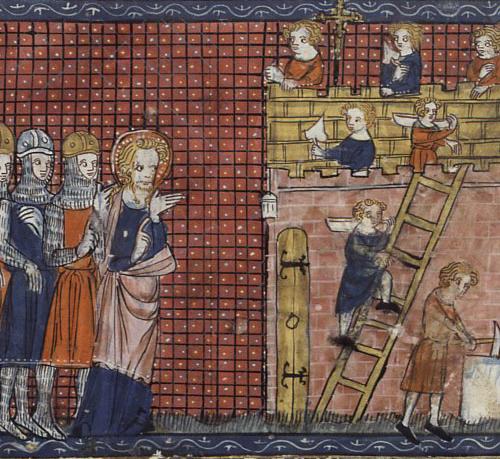
St. Cecilia, also known as Cecily, was born in Rome and educated in the teachings and perfect practice of Catholicism. In her youth she made a vow of virginity to God. However, she was forced by her parents to marry a noble pagan youth named Valerianus. Refusing to forego her vow, she convinced her new husband to respect her virginity, and eventually also won him over to Christianity.
Later, his brother Tiburtius was converted to the faith and both brothers practiced it with great zeal. Consequently, the prefect Turcius Almachius condemned them to death. Their executioner Maximus, however, himself was converted and suffered martyrdom along with the two brothers. Their remains were buried in one tomb by Cecilia.

At this point Cecilia came under the eye of the prefect and was soon sought by his officers. Before being taken prisoner, she made arrangements to have her house converted into a place of worship for the Roman Church. After a glorious profession of faith, she was condemned to be suffocated in her bath. Miraculously, this failed to harm Cecilia, so a soldier was assigned to behead her. Striking the neck of Cecilia three times without completely decapitating her, the soldier fled, leaving the virgin soaked in blood. She lived for three more days, during which time she was able to make dispositions for the poor. She was buried in the Catacombs of Callistus among the bishops and confessors who were martyred for the faith.

St. Cecilia is the patron saint of music. Many medieval pictures of Cecilia show her either holding a crown of martyrdom in her hand or playing the organ. While musicians played at her wedding, Cecilia sang in her heart to God. When the Academy of Music was founded at Rome in 1584, Cecilia was made patroness of the institute, whereupon her veneration as patroness of church music in general became more universal. Today, Cecilian societies (musical associations) exist everywhere, and the organ has become the primary attribute depicted in Cecilian art.

Prayer

St. Cecilia, pray for us that we make music in our hearts to God and manifest our love for Him in our daily deeds. In the holy name of Jesus we pray. Amen.

Humour: "Self-Made Men" by Stephen Leacock

All right, so Canada doesn't have much of a literature. At least, however, we have Lucy Maud Montgomery, and Michael O'Brien, and of course, Stephen Leacock. Yes, that master of humour is just as funny today as he was a hundred years ago, and I do believe it's time I gave him his due by posting something of his on this website. And no, it isn't "My Financial Career"!

*****
They were both what we commonly call successful businessmen--men with well-fed faces, heavy signet rings onfingers like sausages, and broad, comfortable waistcoats,a yard and a half round the equator. They were seatedopposite each other at a table of a first-class restaurant,and had fallen into conversation while waiting to givetheir order to the waiter. Their talk had drifted backto their early days and how each had made his start inlife when he first struck New York.

"I tell you what, Jones," one of them was saying, "I shall never forget my first few years in this town. By George, it was pretty uphill work! Do you know, sir, when I first struck this place, I hadn't more than fifteen cents to my name, hadn't a rag except what I stood up in, and all the place I had to sleep in--you won't believe it, but it's a gospel fact just the same--was an empty tar barrel. No, sir," he went on, leaning back and closing up his eyes into an expression of infinite experience, "no, sir, a fellow accustomed to luxury like you has simply no idea what sleeping out in a tar barrel and all that kind of thing is like."

"My dear Robinson," the other man rejoined briskly, "ifyou imagine I've had no experience of hardship of that sort, you never made a bigger mistake in your life. Why,when I first walked into this town I hadn't a cent, sir, not a cent, and as for lodging, all the place I had for months and months was an old piano box up a lane, behind a factory. Talk about hardship, I guess I had it pretty rough! You take a fellow that's used to a good warm tar barrel and put him into a piano box for a night or two,and you'll see mighty soon--"

"My dear fellow," Robinson broke in with some irritation,"you merely show that you don't know what a tar barrel's like. Why, on winter nights, when you'd be shut in there in your piano box just as snug as you please, I used to lie awake shivering, with the draught fairly running in at the bunghole at the back."

"Draught!" sneered the other man, with a provoking laugh,"draught! Don't talk to me about draughts. This box I speak of had a whole darned plank off it, right on thenorth side too. I used to sit there studying in the evenings, and the snow would blow in a foot deep. And yet, sir," he continued more quietly, "though I knowyou'll not believe it, I don't mind admitting that some of the happiest days of my life were spent in that same old box. Ah, those were good old times! Bright, innocent days, I can tell you. I'd wake up there in the mornings and fairly shout with high spirits. Of course, you may not be able to stand that kind of life--"

"Not stand it!" cried Robinson fiercely; "me not stand it! By gad! I'm made for it. I just wish I had a taste of the old life again for a while. And as for innocence!Well, I'll bet you you weren't one-tenth as innocent as I was; no, nor one-fifth, nor one-third! What a grand old life it was! You'll swear this is a darned lie and refuse to believe it--but I can remember evenings when I'd have two or three fellows in, and we'd sit round and play pedro by a candle half the night."

"Two or three!" laughed Jones; "why, my dear fellow, I've known half a dozen of us to sit down to supper in my piano box, and have a game of pedro afterwards; yes, and charades and forfeits, and every other darned thing. Mighty good suppers they were too! By Jove, Robinson, you fellows round this town who have ruined your digestions with high living, have no notion of the zest with whicha man can sit down to a few potato peelings, or a bit ofbroken pie crust, or--"

"Talk about hard food," interrupted the other, "I guess I know all about that. Many's the time I've breakfastedoff a little cold porridge that somebody was going to throw away from a back-door, or that I've gone round to a livery stable and begged a little bran mash that theyintended for the pigs. I'll venture to say I've eaten more hog's food--"


"Hog's food!" shouted Robinson, striking his fist savagely on the table, "I tell you hog's food suits me better than--"

He stopped speaking with a sudden grunt of surprise as the waiter appeared with the question:
"What may I bring you for dinner, gentlemen?"

"Dinner!" said Jones, after a moment of silence, "Dinner! Oh, anything, nothing--I never care what I eat--give me a little cold porridge, if you've got it, or a chunk of salt pork--anything you like, it's all the same to me."

The waiter turned with an impassive face to Robinson.

"You can bring me some of that cold porridge too," he said, with a defiant look at Jones; "Yesterday's, if you have it, and a few potato peelings and a glass of skim milk."

There was a pause. Jones sat back in his chair and looked hard across at Robinson. For some moments the two men gazed into each other's eyes with a stern, defiant intensity. Then Robinson turned slowly round in his seat and beckoned to the waiter, who was moving off with the muttered order on his lips.

"Here, waiter," he said with a savage scowl, "I guess I'll change that order a little. Instead of that cold porridge I'll take--um, yes--a little hot partridge. Andyou might as well bring me an oyster or two on the halfshell, and a mouthful of soup (mock-turtle, consomme, anything), and perhaps you might fetch along a dab offish, and a little peck of Stilton, and a grape, or a walnut."

The waiter turned to Jones.

"I guess I'll take the same," he said simply, and added;"and you might bring a quart of champagne at the same time."

And nowadays, when Jones and Robinson meet, the memory of the tar barrel and the piano box is buried as far out of sight as a home for the blind under a landslide.

Barnaby Rudge Continues


Well, as some of you may know, I've been working away on a screenplay for sometime, on and off. The goal is to produce a faithful, six episode miniseries of Charles Dickens' "Barnaby Rudge". At present I am in the second episode and somewhat revising the first. I have to say, I am very fond of the way I'm pulling Barnby himself off, though i can't find much of interest to do with Gabriel Varden. Why must he be so necessarily - normal? Oh well, it is all Dickens' fault for publishing the novel as a serial, and thinking at first that boring old Varden would be the main character at first. Thankfully, he'll change his mind soon- I hope. I'm going to try to find a way of focusing more on Barnaby in the first couple of episodes than happens in the book.

At any rate, I'm going to turn it over to Lady Clare, the Captain, and another friend of ours whom I will call Gonzalo, after the character he is playing in our production of "The Tempest". They are graciously going to red pen it for me, so that I can improve my poor little unfinished screenplay. I will only be giving them approximately a quarter to a half of the first epsiode. See if it would actually catch anyone's interest were it to hit the screen. All three of them are splendid writers, I must add. We are all members of "The Weavers", our campus Writers' Club, which Captain Quicksilver founded. However, this post is getting dreadfully dull, but it fulfills my urge to type something up for "The Minstrel". I doubt anyone actually reads this - oh well. I shall be like the barber who whispered to the reeds, "Our prince has donkey's ears!" soully for his own good.

Anyway, at present we have Barnaby dashing through the fields to deliver a message to the Warren, Mr. Chester riding in his carriage (accompanied by suitably ominous music), the Maypolers sitting about in their tavern being country bumpkins and knowing everything, and Sim Tappertit about to attend a secret underground meeting of the prentice kngihts, plotting the day when they'll overthrow everything...

St. Francis Was a Minstrel Too!


Well, as you have no doubt noticed, this blog has completely changed it garments. Indeed, like a religious, it has taken on a new name. I have decided that from now on it shall be known as "The Minstrel", partly in honour of St. Francis. I ran across this wonderful excerpt from "God's Troubadour - The Story of St. Francis of Assisi" today, and have decided to post it for your pleasure.


The Young Soldier

“Content to take his adventure gladly.”- Hakluyt

“Stone walls do not a prison make,Nor iron bars a cage.” - Lovelace

There were many and terrible wars in Italy in the thirteenth century, and the chance of trying his fortune as a soldier was not long in coming to Francis Bernardone.

Only fifteen miles away from Assisi stands a larger city, called Perugia. It also is built upon a mountain, and the two towns seem to smile at each other across the green valley. But for hundreds of years there were only bitter looks and hatred between the two. Perugia, higher and stronger, lay like a dragon, ready to spring upon her small but furious enemy. Assisi, like a lion’s cub, was always ready to fight. Sometimes the lion was victor; always it was fierce enough to make the huge dragon writhe with pain.

When Francis Bernardone was about twenty years old, there was war between the great dragon and the little lion. Down from one mountain came the Perugian army. Down from the other came that of Assisi. With the army of Assisi rode Francis and most of the company of friends who had been so merry together in times of peace. They were gay as ever, and eager to see what a real battle might be like.

The armies met in the plain, and fought by the river side, near a tiny town called Ponte San Giovanni, the Bridge of Saint John. This time the Perugians were too strong for the Assisans, and the young soldier’s first combat was a defeat. One day taught him all the horror of a field of battle. He saw men wounded and dying. He heard the terrified cries of riderless horses. He suffered from blinding sun and parching thirst. War, that he had thought so noble and glorious, seemed somehow confused and cruel and hideous.

The army of Assisi lost heavily that day. Many men were slain, many were made prisoners, and one of the prisoners was Francis Bernardone. He was too tired, too hungry and too thirsty to feel anything keenly except the need of sleep and food; yet he wondered how it had all happened. Could he be the same man who had gone about for days delighting in the song of a warlike Troubadour: “Luck to the arm that’s quickest, And, if at odds ye strive,Die where the field is thickest,But never yield alive”?

He knew that he had not been a coward. He had not even been afraid, yet here he was unarmed and captive.

Because of his beautiful dress, and because of his courtly manners, Francis was placed, not among the common soldiers, but among the nobles. For a whole year he was a prisoner of war. It must have been a sad change from the free, wild life in Assisi. Captives, even if of noble rank, were not softly treated in old times; and, though Francis and his companions may not have suffered serious hardships, the long confinement was, in itself, a cruel thing to bear. On Francis Bernardone, however, his misfortune sat lightly. The army of Perugia could not make a captive of his fancy. His fellow-prisoners were astonished to hear him tell of his hopes and plans for the future; of the battles he should fight; of the fame he should win; of the beautiful ladies who should smile on him. The brave knights whom he admired, Gawain, Tristram and Lancelot, had sometimes fallen into prison, but had won their way out again, to fight better than before. So Francis still dreamed of war and glory, and boasted in his pride: “You will see that, some day, all the world will adore me.”

Though he was proud and boastful, Francis was still gentle-hearted, and quick to feel sympathy for all who were unhappy. Among the prisoners of war was one man so vain and ill-tempered that his companions would have nothing to do with him. The unfortunate creature sat gloomily apart, with a black frown on his face, and with black thoughts in his mind. The songs and jests and games with which the others whiled away the long hours made him seem all the lonelier in his silent corner. The sight of the sad, bitter face was more than Francis could bear. Many times he slipped away from the noisy group of his comrades to speak cheerily to the solitary knight, and, little by little, with the friendliness that no one was ever known to resist, he won the heart of the miserable man. Through the good-will of the boy whom everybody loved, the victim and his tormentors in the end became friends once more, and there was peace in the great prison.
All through the long winter, from across the valley, the sad eyes of the Lady Pica watched the towers of Perugia. In her heart she questioned what might have been her boy’s fate. Was he ill, and suffering and lonely? When would he come back to her? She seemed still to hear him singing, as on the morning when he had ridden out so blithely to his first battle:

“Comrades, let each be readyTo give and take his part;Shields bright and lances steady, And all men glad of heart.”

If the breeze that swept down the long valley from Perugia could have carried the prisoner’s merry voice, the mother might have been somewhat comforted.

In prison or out of it, the heart of Francis of Assisi was always the heart of the poet, the Troubadour. Because his companions remembered gratefully the songs and laughter that brightened their captivity, the story of his gaiety has come down to us across seven hundred years.